






A wound is a type of injury where the skin is damaged (deeply or superficially). Immediately after the skin is injured, it responds with the initiation of a wound healing process.
An acute wound follows the normal stages of wound healing to achieve complete repair within 12 weeks.
Examples of acute wounds include:
Examples of surgical wounds include:
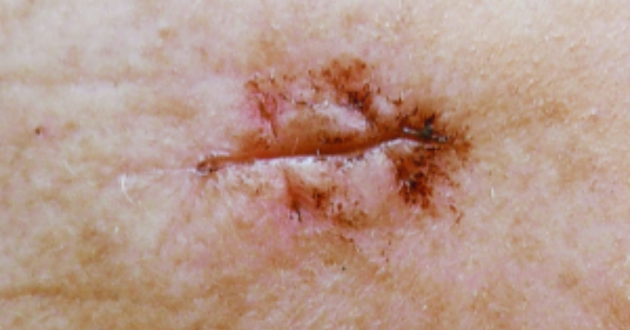
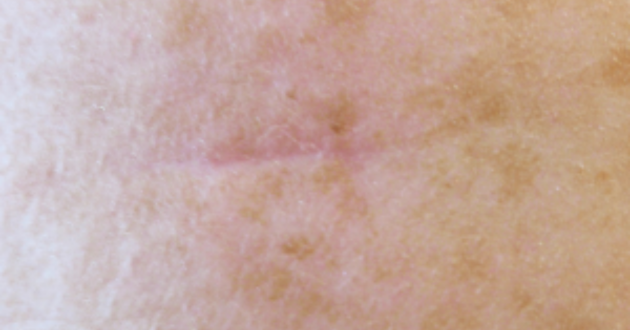
Linear incision – head 2
Start of treatment with Stratamed
After 2 months of treatment with Stratamed
2 months post-surgery. Monotherapy treatment with Stratamed.
BCC (Basal cell carcinoma)13
Start of treatment with Stratamed
After 10 days of treatment with Stratamed
After 30 days of treatment with Stratamed
Application of Stratamed twice daily.
Examples of chronic wounds include:
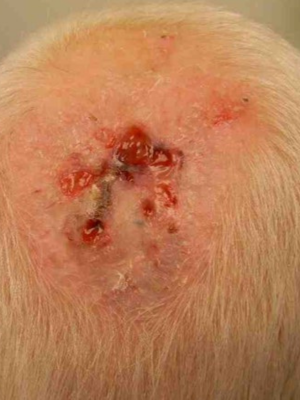
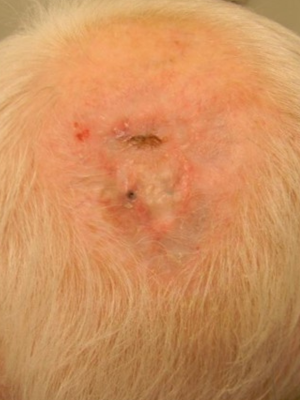
Chronic wound – Scalp20
4 months after surgery. Start of treatment with Stratamed
After 7 days of treatment with Stratamed
Chronic wound – head20
Post-procedure, start of treatment
After 5 weeks of treatment with Stratamed
A burn injury occurs when the skin comes into contact with a heat source such as fire, hot liquid, steam, chemicals, or electricity. The severity of a burn depends on several key factors, including the temperature, duration of exposure, location on the body, and the total surface area affected.15
Burns are categorized according to the extent of damage to the skin: Superficial burns (1st degree burns), which affect only the outer layer of the skin (epidermis); Partial-thickness burns (2nd degree burns), which involve damage to both the epidermis and the upper dermis (second layer); And full-tickness burns (3rd degree burns), those are severe burns, damaging the entire skin layer and sometimes reaching underlying tissues, fat, muscle, or bone.15
Examples of burn wounds include:
Second-degree burn – foot17
Start of treatment with Stratamed
After 6 days of treatment with Stratamed
After 9 days of treatment with Stratamed
A 2-year-old boy sustained a second-degree burn on the right foot.
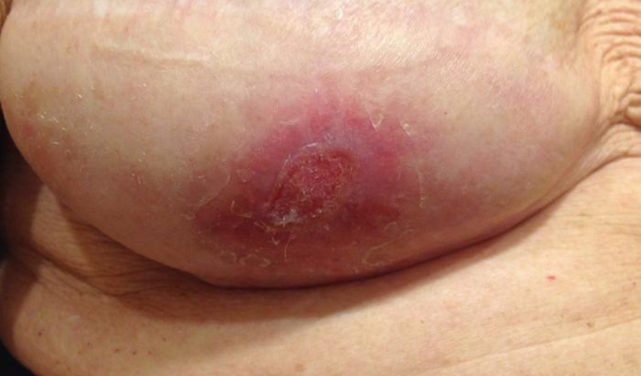
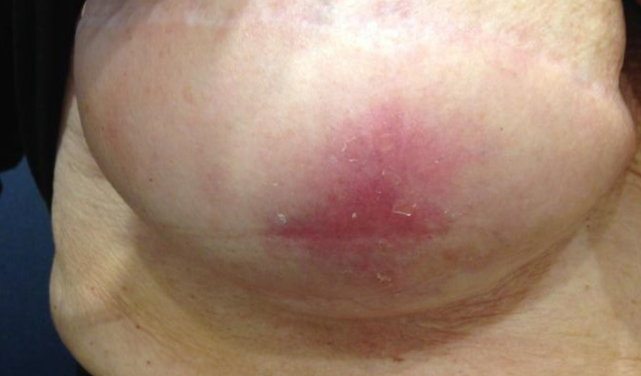
Second degree burn – breast??
Start of treatment with Stratamed
After 11 days of treatment
with Stratamed
After 36 days of treatment
with Stratamed
Application of Stratamed twice daily.
Example of cosmetic surgeries include:
Reduction mammoplasty – breast19
Start of treatment with Stratamed
After 5 months of treatment with Stratamed
Stratamed in combination with CO2 laser
Examples of laser procedures include:
Laser Resurfacing (acne scars)2
Before procedure
Post-procedure, start of treatment with Stratamed
After 7 days of treatment with Stratamed
Treatment with Stratamed in combination with Thermage® and Co2 fractional laser resurfacing.
Stratamed can be applied immediately after general and cosmetic surgeries, trauma, chronic wounds, burns*, skin grafts, donor site wounds, bites, and grazes.
*1st and 2nd degree burns, and 3rd degree burns only after the presence of granulating tissue.