
Faster re-epithelialization of the wound bed:
Stratamed’s protective and hydrophobic silicone film has a semi-occlusive effect and therefore improves the tissue hydration of the injured skin area. It allows a faster migration of keratinocytes across the wound bed and supports a more rapid re-epithelialization and effective healing. The faster re-epithelialization dramatically decreases the incidence of abnormal scarring and gives patients a faster recovery time.
Reduction of inflammatory response :
Stratamed forms a flexible, protective sheet that is gas permeable but semi-occlusive, which weakly bonds to the injured skin and protects it from chemical and microbial invasion, but it does not penetrate into the epidermis or dermis. The polymers Stratamed contains have no measurable pH value, and therefore do not affect the protective acid mantle of the skin and do not react with the newly forming epithelial tissues. This leads to a reduction in the inflammatory response (redness/discoloration, burning sensation, itching, discomfort, pain etc.), and effective healing of the wound and therefore enhances therapeutic results.
Abnormal scar prevention:
After the re-epithelialization of a wound, the stratum corneum is immature and still allows abnormally high levels of Trans-Epidermal Water Loss (TEWL). Dehydration is signaled to keratinocytes, which then start to produce cytokines, which in epidermal-dermal signaling activate dermal fibroblasts to synthesize and release collagen. Excessive collagen production leads to abnormal scarring. At this wound healing stage, the Stratamed layer restores the barrier function of the stratum corneum, reduces TEWL and stops dehydration of the skin. Reduction of TEWL turns off stimulation of keratinocytes and the production of cytokines and thus normalizes the level of collagen production, resulting in a normal mature scar.
On first use of 5g, 10g and 20 g tubes remove the cap, cut the nozzle tip of the tube and close with the cap after use.

On 50 g tubes remove the cap, then the protective seal and close with the cap after use.

Do not apply any other product underneath Stratamed. Applying medications on top of Stratamed will have no effect because, by design, it will not be able to pass through the Stratamed film. If an infection is present, have it treated prior to beginning your Stratamed treatment.
Stratamed does not require special disposal methods. Please follow your local disposal regulations.
Stratamed should be applied once daily, or twice daily to exposed areas or as advised by the physician. You may reapply Stratamed after each wash. Stratamed may be re‐applied more often to ensure constant contact with the skin, or to reduce symptoms.
Stratamed does not need to be rubbed in or massaged, as it does not penetrate below the level of stratum corneum and will not enhance its effect.
For correct storage of Stratamed please reclose the tube tightly with the cap and keep out of the reach of children. Stratamed does not have a specific temperature storage condition, you can store it in the drawer. You may also store Stratamed in the refrigerator prior to application for relief of symptoms.
• Ensure that the affected skin or wound is clean.
• Gently pat dry as much excess exudate or wound fluid from the area as possible prior to gel application.
On damaged or broken skin not requiring a secondary dressing:
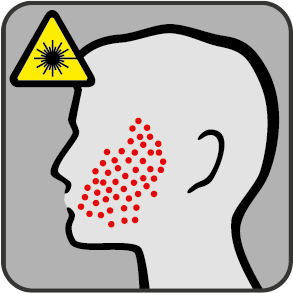
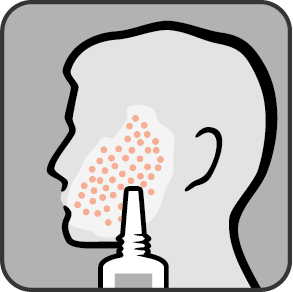
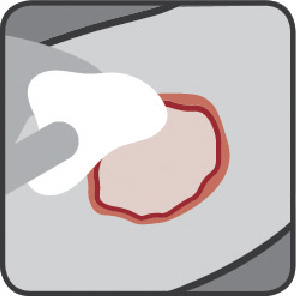
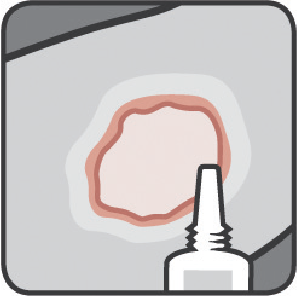
Apply a very thin layer of Stratamed to the affected area and allow the gel to dry.
When applied correctly to the affected areas, Stratamed should be dry in 5–6 minutes. If it takes longer to dry you have probably applied too much. Gently remove the excess with a clean tissue or gauze and allow the drying process to continue.
Stratamed should be applied once daily, or twice daily to exposed areas or as advised by the physician.
Once dry, Stratamed may be covered by sunscreen, cosmetics, pressure garments or casts.
On damaged skin or wounds requiring a secondary dressing:
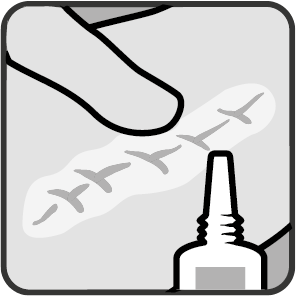

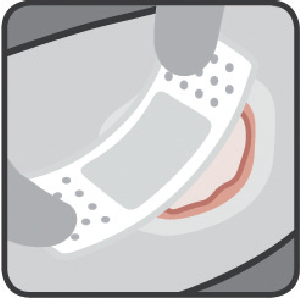

Apply a thin layer of Stratamed then cover with the secondary dressing. Drying is not necessary.
Stratamed should be re-applied when changing the dressing or checking the wound progress, or as advised by the physician.
When applied correctly, Stratamed should be dry in 5-6 minutes. If it takes longer to dry you have probably applied too much. Gently remove the excess with a tissue and allow the drying process to continue.
Yes, Stratamed can be covered with a secondary dressing. The gel does not need to dry before applying a secondary dressing and can be covered immediately.
Stratamed can be used on the lips. Stratamed may need to be applied more frequently when used on the lips.
Yes. One of the advantages of a primary dressing in the form of a gel like Stratamed is that the film can be distributed to cover the entire surface of the eyelid with precision. Stratamed should not be place in contact with the eye as it may cause irritation.
There have been no allergic reactions observed with the proper use of Stratamed. Stratamed is an inert biocompatible non-transdermal polymer. Irritation, sensitivity and acute toxicity testing was conducted and no adverse reactions have been noted. However, if irritation or other symptoms should occur, discontinue use and consult your physician.
Stratamed is a full-contact flexible wound dressing which provides a moist wound healing environment for abnormal scar prevention.
Yes, Stratamed is sterile until opened. Additionally, Stratamed is bacteriostatic, it hinders bacteria from reproducing, while not necessarily harming them otherwise, making it suitable for use on open wounds or compromised skin.
If not completely dry, Stratamed may stain clothing. Normal washing will not remove the product from the clothes. If staining occurs, dry cleaning should be able to remove it without damaging the fabric.
Hands: Stratamed can be easily removed from the hands by washing them with warm water and soap. Repeat if necessary.
Material (Clothing or Sheets): If not completely dry, Stratamed may stain clothing. Normal washing will not remove the product from the clothes. If staining occurs, dry cleaning should be able to remove it without damaging the fabric.
There have been no side effects observed with the proper use of Stratamed. The ingredients in Stratamed are completely compatible with human biology. However, if irritation or other symptoms should occur, discontinue use and consult your physician.
Polysiloxanes, siloxane resin
Stratamed has an expiry date of five years after manufacturing. This date is imprinted on every box (side flap) and tube (end seal) in the format year-month (e.g. EXP 2029-09 or 13-09).
No, Stratamed is odorless.
Stratamed is suitable for adults, individuals with sensitive skin, children, infants, pregnant, and breastfeeding mothers.
Yes, Stratamed is completely biocompatible, inert and is intended for the use for both, children and people with sensitive skin.
Stratamed may be used on infants, during pregnancy and while breastfeeding.
There are delicate areas where it is very difficult or impossible to use physical dressings:
• Areas with high mobility
• Areas with high friction
• Wet skin (mucosa), hindering adherence
• Areas with higher hygienic requirements (e.g. perineum)
Physical dressings, including silicone dressings, do not create a full contact surface because air bubbles form underneath. Delicate areas like the eyes, nostrils and lip contours remain exposed and subjected to irritation due to the adhesive tape. Stratamed is an advanced film-forming wound dressing in the form of a self-drying silicone gel. Stratamed is flexible, adaptable, and creates a full-contact surface.
No. Stratamed is a transparent wound dressing. If you want to know if it’s still there, apply a small amount of water (droplets) to the site and observe if it beads off the area, which confirms that the gel is still in place.
You can start to apply Stratamed immediately after suturing.
Stratamed does not need to be removed (or washed off) prior to next application. The Stratamed layer should wear off slowly with your daily activities. You can simply re‐apply Stratamed. If you still would like to remove Stratamed, you can wash the area with water and soap (or follow your doctor's recommendations for the skin washing). Repeat if needed. For best results, Stratamed should be maintained in continuous contact with the skin. Stratamed may be re‐applied more often to ensure constant contact with the skin, or to reduce symptoms.
Regarding the impression of the Stratamed tube, please be informed that during the filling process in production there is air left inside the tube for sealing purposes. Therefore, the tube itself is larger than the product mass. The manufacturing standards are implied to Stratpharma products for all the markets around the world.
We understand your concerns about animal testing and your wish to use cruelty-free labeled products.
Unlike cosmetics, medical devices are regulated differently; in a similar level to pharmaceuticals. As we are based in Switzerland, we are liable to the regulations created by the European Commission and Swissmedic.
These strict regulations require that every medical device has to be tested under a guideline called “ISO-10993 Biological Evaluation of Medical Devices” and unfortunately these tests have to be performed with animals. This is the case for every medical device that we might use frequently, like contact lenses or plasters but also for more complex medical devices, like implants.
It is important to highlight that these tests are not carried out every time a new batch is manufactured. The tests are only done once prior certification by the competent authorities.
The tests we have performed are regulated and controlled under the Association for the Assessment and Accreditation of Laboratory Animal Care (AAALAC). AAALAC International is a private, nonprofit organization that promotes the humane treatment of animals in science through voluntary accreditation and assessment programs.
You may want to check their website: https://www.aaalac.org/about/index.cfm
Stratamed is available online at us.stratpharma-shop.com
We recommend using Stratamed (blue packaging) on open wounds, until the wound is fully healed.
Once the wound is healed, we recommend using Strataderm . Strataderm is a rapidly drying, non-sticky, transparent, silicone gel formulation for the treatment of scars, both old and new. Strataderm will soften and flatten raised scars, relieve itching and discomfort and reduce redness and discoloration associated with scars. Strataderm is not indicated and should not be applied on open wounds or compromised skin.
For more information about Strataderm, please visit the website www.strataderm.com
For scar treatment, Stratpharma does offer another product called Strataderm; for the prevention and treatment of abnormal scars, both old and new.
Strataderm is used to soften and flatten scars, relieve the itching and discomfort of scars as well as to reduce redness and discolouration associated with scars.
Strataderm is similar to Stratamed however the formula is different as it is designed to be used once the wound is closed and may be applied once per day unlike Stratamed which is recommended as twice daily application. Please note that Strataderm is not indicated and should not be applied on open wounds or compromised skin.
So you may choose to continue to use Stratamed or switch to Strataderm and keep the remaining portion of your Stratamed for the next scrape, cut or burn.
For more information about Strataderm, please visit the website www.strataderm.com
Stratamed is indicated and registered in the FDA to be used on humans and on open wounds (like the wound your cat has). We do not hold a registration for veterinary applications however we have had good anecdotal reports for the use of Stratamed in animals. Many of the original studies looking at the toxicology of medical silicones were performed on animals – mainly rodents, rabbits, and pigs and were found to be safe and effective.
For further medical advice on the use of Stratamed on your cat, please refer to your veterinary.
If you have any questions about Stratamed you can contact us via the contact form.